
Blogs
Exhausted From Being the Only One Trying
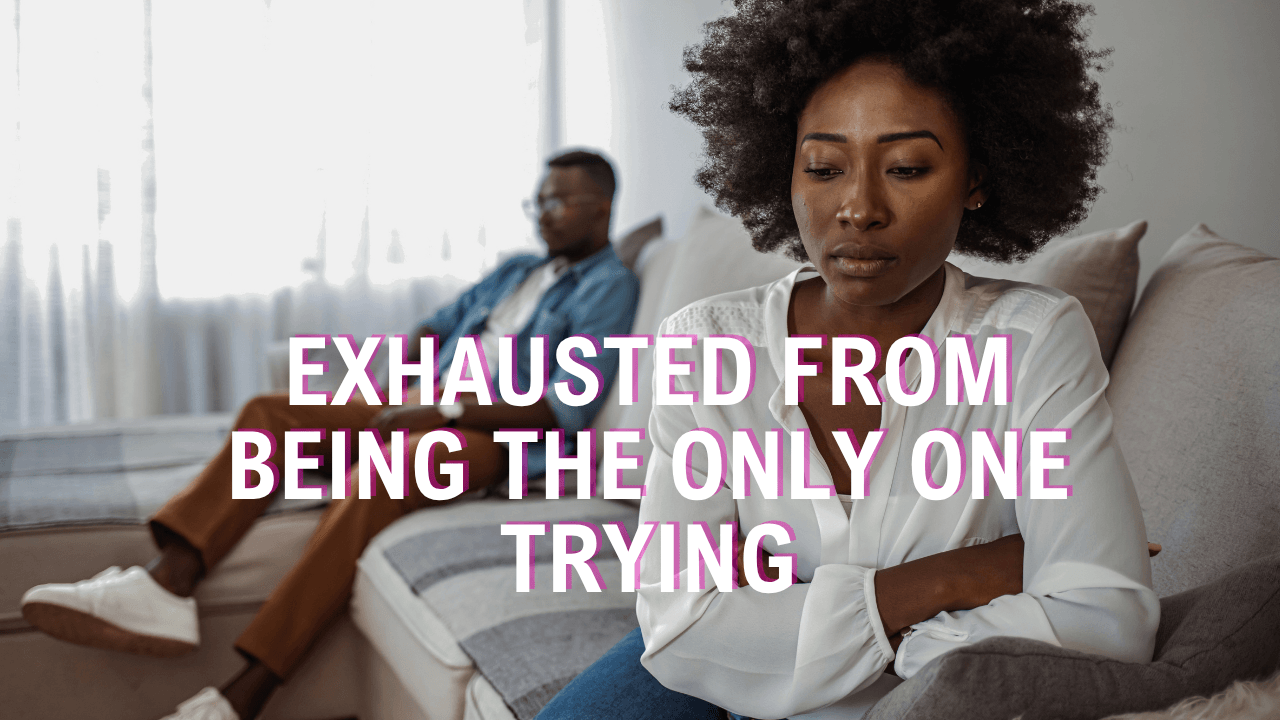
There is a point in a relationship when you're no longer just frustrated with your partner. You're tired. Tired of trying to explain what you need. Tired of being the one who brings up the problems. Tired of trying to reconnect after things feel distant. Tired of wondering what else you could possibly do to make the relationship feel like a partnership.
You may still love them. You may still care deeply about the relationship. That's what makes this so difficult. You're not necessarily looking for a reason to leave. You're looking for a reason to believe that all of your effort is actually going somewhere.
And when you're the only one trying, eventually you start running out of energy.
When Trying Becomes Your Role
In the beginning, you may not even realize you're doing it. You simply want things to be good between you, so when something goes wrong, you address it. When there's distance, you reach out. When there's an argument, you want to resolve it. When you notice your connection slipping, you try to bring it back.
The problem is when this becomes a pattern where you're always the person responsible for getting the relationship back on track.
You start feeling like if you don't say something, nothing will get addressed. If you don't make the plans, you won't spend time together. If you don't initiate affection, there won't be any. If you don't bring up the difficult conversations, they'll never happen.
That's when trying stops feeling like love and starts feeling like a job.
You Can’t Make Someone Meet You Halfway
One of the hardest things to accept is that your effort cannot compensate for someone else's unwillingness to participate.
You can become a better communicator. You can learn to manage your reactions. You can become more patient and understanding. You can explain your needs clearly and give your partner opportunities to respond differently.
But you cannot make someone become invested.
If you've had the same conversation over and over again and nothing changes, the problem may not be that you haven't communicated well enough. They may understand exactly what you're asking for. They simply aren't taking the same level of responsibility for the relationship that you are. And that's painful because it means there isn't always another technique, conversation, or version of yourself that will fix the problem.
Sometimes you have to stop asking, "What can I do differently?" and start looking at what the other person is actually doing.
The Exhaustion Comes From Carrying What Isn't Yours
When you're constantly trying to keep a relationship together, you begin carrying more than your share emotionally.
You're thinking about the relationship when your partner isn't. You're worrying about where things are going. You're analyzing conversations and wondering what you should say next. You're trying to prevent another argument or figure out how to get closer again.
Meanwhile, your partner may simply be going about their life.
That imbalance creates an enormous amount of emotional exhaustion because you never get to relax into the relationship. You're always working on it. A relationship should have moments where you can simply enjoy each other. You shouldn't feel like you're constantly managing problems, managing emotions, or trying to create connection by yourself.
Stop Measuring Love By How Much You Can Endure
Sometimes we convince ourselves that continuing to try proves how much we love someone. We tell ourselves that if we just stay patient enough, understanding enough, or committed enough, eventually things will change.
But your ability to tolerate an unhealthy dynamic is not proof of your love.
You can love someone and still be exhausted by the relationship. You can care about someone and recognize that you're no longer willing to do all of the work. You can want things to improve without being the person responsible for making all of the improvements happen. Love is not supposed to require you to constantly abandon your own needs just to keep another person comfortable.
Pay Attention to What Happens When You Step Back
If you've spent a long time being the one who initiates everything, it can feel uncomfortable to step back. You may worry that you're giving up or that you're being selfish.
But stepping back doesn't have to mean withdrawing love or playing games. It can simply mean that you stop doing the things you've been doing automatically to compensate for your partner.
You stop rushing in to fix every problem. You stop being the only person initiating difficult conversations. You stop constantly trying to create closeness when the other person isn't participating. And then you get to see the relationship more clearly.
Does your partner notice? Do they step forward? Do they become more engaged? Are they willing to have the conversations you've been trying to have? Or does everything simply stop?
Sometimes the answer is uncomfortable, but it can also be clarifying.
You Deserve Mutual Effort
A healthy relationship isn't one where two people never struggle. It's one where both people recognize that the relationship belongs to both of them.
You shouldn't have to convince someone to communicate with you. You shouldn't have to repeatedly explain why effort matters. You shouldn't have to beg for the basics of partnership and then feel grateful when you receive them occasionally.
There will be seasons when one person needs more from the other, but there should still be an underlying sense that you're both invested.
You deserve to feel pursued, considered, listened to, and supported. You deserve to know that if something goes wrong, you aren't automatically going to be the person responsible for fixing it.
Most importantly, you deserve to stop exhausting yourself trying to create a relationship that requires two people. If you're tired of being the only one trying, maybe you don't need to try harder. Maybe you need to stop carrying the entire relationship long enough to see whether the other person is willing to pick up their side.
Because you can love someone deeply and still recognize that love cannot be sustained by one person's effort alone.
2026 Stephanie Lyn Life Coaching, Inc