
Blogs
Why Do I Suddenly Have Zero Patience For The Things I Used To Just Swallow?
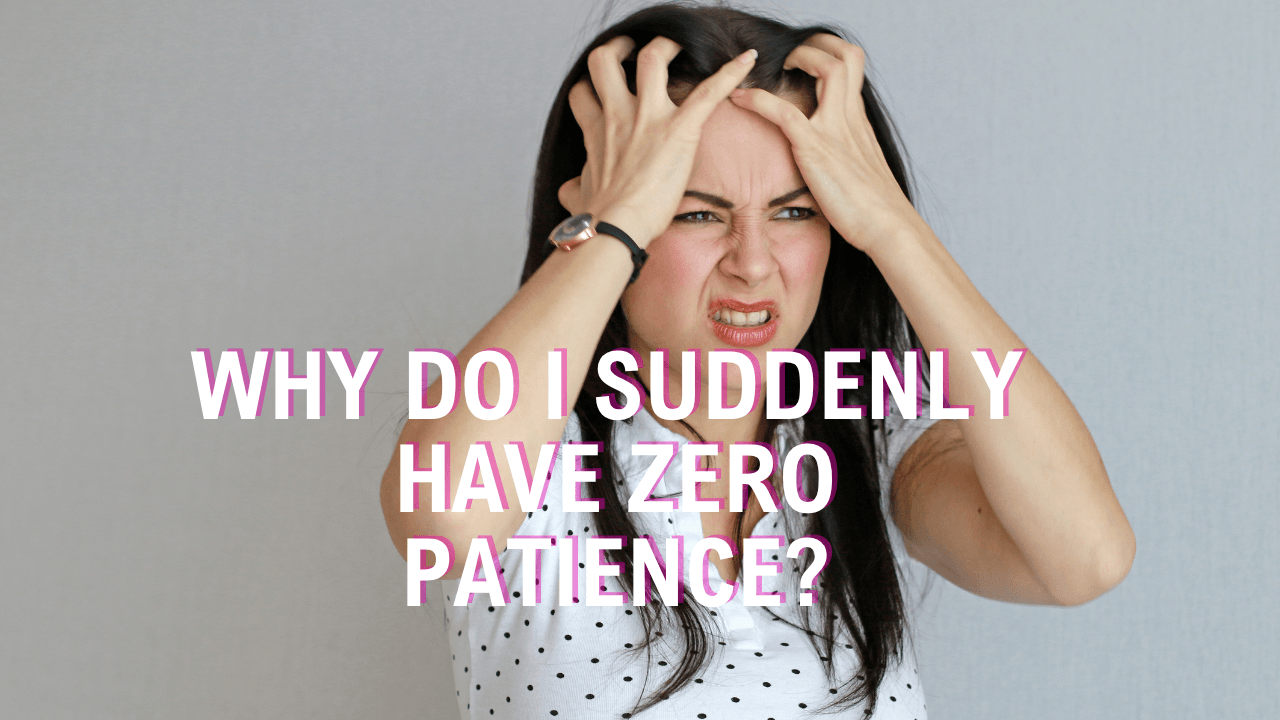
If you’ve found yourself lately wondering, "Where did my filter go?" you are definitely not alone.
For years, maybe even decades, you’ve been an absolute expert at swallowing your irritation. You let the snarky comment slide across the dinner table. You bit your tongue instead of starting an argument that would take too much energy to finish. You absorbed the extra emotional weight of the household, smoothed over awkward social moments, and told yourself that being the "easygoing" or "mature" one was just the price of keeping the peace. You mastered the art of making yourself smaller, quieter, and infinitely more accommodating so that everyone else could move through their days undisturbed.
And then, somewhere along the way, the script flipped. Now?
The tolerance is just... gone. The well is bone dry.
Maybe it’s a partner chewing too loudly, a friend dropping yet another flaky excuse, or the weight of managing everyone else's daily lives while yours is completely ignored. Instead of swallowing that familiar lump in your throat like you used to, you feel a hot wave of frustration rising in your chest, and a voice inside your head screams, I am not doing this anymore.
If you are sitting there wondering why you suddenly have zero patience left for the nonsense you used to absorb without blinking, let's talk about what is actually happening beneath the surface starting with the chemistry in your brain.
The Biological Shift: What Estrogen Did for Us (and What Happens When It Dips)
We often talk about midlife changes through a purely psychological lens, but we have to talk about the physical engine driving a lot of this: hormones.
For most of our adult lives, estrogen was doing some heavy lifting behind the scenes. Estrogen isn't just a reproductive hormone; it directly impacts our neurotransmitters like serotonin and dopamine which regulate mood, stress tolerance, and emotional stability.
In many ways, high or stable levels of estrogen helped buffer us against daily friction. It softly padded our edges, making it biologically easier to grin and bear it, to smooth things over, and to stay quiet when things got uncomfortable. It contributed to that nurturing, tend-and-befriend instinct where keeping social harmony felt like the path of least resistance.
And then perimenopause hits.
As estrogen begins its unpredictable roller-coaster decline, that biological buffer starts to thin out. Your brain's chemical safety net isn't catching the micro-stresses the way it used to. Suddenly, the things you used to effortlessly "tolerate" hit your nervous system like a lightning bolt.
It’s not that you’re losing your mind or turning into a cranky person overnight. It’s that your body is physically dropping the chemical requirement for peacekeeping. Without that high tide of estrogen keeping a lid on your tolerance, your nervous system is finally telling the absolute truth: We are done carrying things that don't belong to us.
The Breaking Point is Actually a Wake-Up Call
It is so easy to look at this lack of patience and instantly turn it against yourself. You might catch your tone snapping at someone you love, or feel a surge of pure rage over a minor inconvenience, and think, What is wrong with me? Am I turning into a bitter, angry person? Why am I so reactive lately?
No. You aren't turning into a monster you are waking up.
That sudden loss of patience isn’t a character flaw; it’s a biological and psychological boundary-detector screaming that your container is completely full. For so long, you stored up all the micro-frustrations, the quiet compromises, and the unsaid truths. You treated your body and your mind like a dumping ground for other people's emotional convenience.
When you hit midlife, your brain stops accepting the toll of self-abandonment. The things you used to "swallow" didn't actually disappear into thin air. They just sat there, accumulating weight and resentment, until your tolerance finally snapped under the pressure of changing chemistry and unmet needs.
Why the Old Coping Mechanisms Stop Working
When you’re in your 20s and 30s, society teaches women to be the ultimate shock absorbers of relationships. We absorb the impact so things stay smooth. We excuse bad behavior, rationalize emotional unavailability, and call it "being understanding" or "being a good partner."
But the mental math changes dramatically.
You start looking at the next chapter of your life noticing the physical shifts, realizing how fast time is actually moving and a profound realization hits you: The energy it takes to keep swallowing your truth is infinitely higher than the energy it takes to just speak it or walk away from what's causing it.
You simply don't have the internal real estate anymore to care about keeping up appearances at the expense of your own peace. Your brain is wired differently now. It looks at a situation that used to drain you and says, "Nope. We are not doing this today." And honestly? What a relief.
How to Say What You Need to Say (Without Exploding)
Now, here is the nuance we have to master. Dropping the filter and losing your patience doesn't mean we throw the door open to constant reactivity, lashing out, or screaming matches. Just because you are done swallowing doesn't mean you have to weaponize your voice.
There is a massive difference between reacting out of accumulated resentment and responding from a place of grounded truth.
Saying what you need to say in a healthy, grounded way means shifting from defensive explosions to clean, clear boundaries:
Catch the physical wave before you speak. When that estrogen-fueled heat rises in your chest, recognize it. Pause for three seconds. Don't let the 10 years of stored-up frustration spill out onto someone who only triggered the 10th thing on your list today.
Use "I" statements without the emotional padding. You don't need to over-explain, apologize, or build a legal case for why you're upset. Clean communication sounds like: "I am not willing to accept that tone," or "I need space right now," or "That doesn't work for me." You can deliver a boundary with a totally calm, steady voice.
Drop the performance. You don't have to smile while you set a boundary to make it palatable for others. You are allowed to be firm, clear, and unmovable without being cruel.
You aren't losing your patience; you are finding your voice, your boundaries, and your power. And while shedding that old skin and navigating a shifting hormonal landscape can feel a little chaotic at first, learning to speak your truth cleanly is the ultimate act of self-preservation.
2026 Stephanie Lyn Life Coaching, Inc